I Don't Feel Like Myself Anymore: Could It Be Perimenopause?

Have you been wondering why life suddenly feels harder than it used to? You're not alone, and you're certainly not the only woman asking that question.
"I Just Don't Feel Like Myself Anymore."
One of the most common things I hear from women in their 40s isn't:
"I think I'm in perimenopause."
It's:
"I just don't feel like myself anymore."
Usually the story goes something like this.
"I've been feeling off."
"I'm not sleeping well."
"I get irrationally angry over things that never used to bother me."
"I can't focus."
"I can't get anything done."
"My clothes don't fit anymore even though I'm doing all the same healthy things I've always done."
Then comes the sentence that always makes me pause.
"Maybe I'm losing my edge."
Or...
"I can't handle stress like I used to."
"I think I'm just getting lazy."
"I'm worried I'm getting dementia."
"I don't even recognize myself anymore."
Those aren't just symptoms.
Those are fears about identity.
Many women assume these changes mean something about who they're becoming.
As a psychiatrist, I often wonder if they're actually telling me something about what's happening in their body instead.
When Changing Physiology Feels Like Changing Character
One of the hardest parts of perimenopause isn't the hot flashes.
It isn't even the brain fog.
It's the story we tell ourselves about what those changes mean.
When you can't concentrate, you start wondering if you've become less capable.
When you're exhausted all the time, you wonder if you've become lazy.
When you're snapping at people you love, you wonder if you've become impatient or difficult.
When your anxiety suddenly ramps up, you wonder if you're just not coping as well anymore.
That's why I often tell my patients:
Changing physiology can feel like changing character.
The changes are real.
The struggle is real.
But the explanation may be very different than the one you've been telling yourself.
"But I'm Still Having Regular Periods..."
One patient finally worked up the courage to ask her primary care doctor if she might be in perimenopause.
She had several symptoms that sounded suspiciously hormonal, but she was still having regular periods.
She was told she couldn't be in perimenopause and that there really wasn't anything to do except wait.
Honestly?
That conversation got me fired up.
Because I hear versions of it all the time.
The reality is that having regular periods does not rule out perimenopause.
For many women, hormone levels begin fluctuating years before periods become irregular.
That means symptoms can show up long before menopause itself.
Every woman experiences this transition differently, but common symptoms include:
Sleep disruption
Anxiety
Irritability
Brain fog
Trouble concentrating
Mood changes
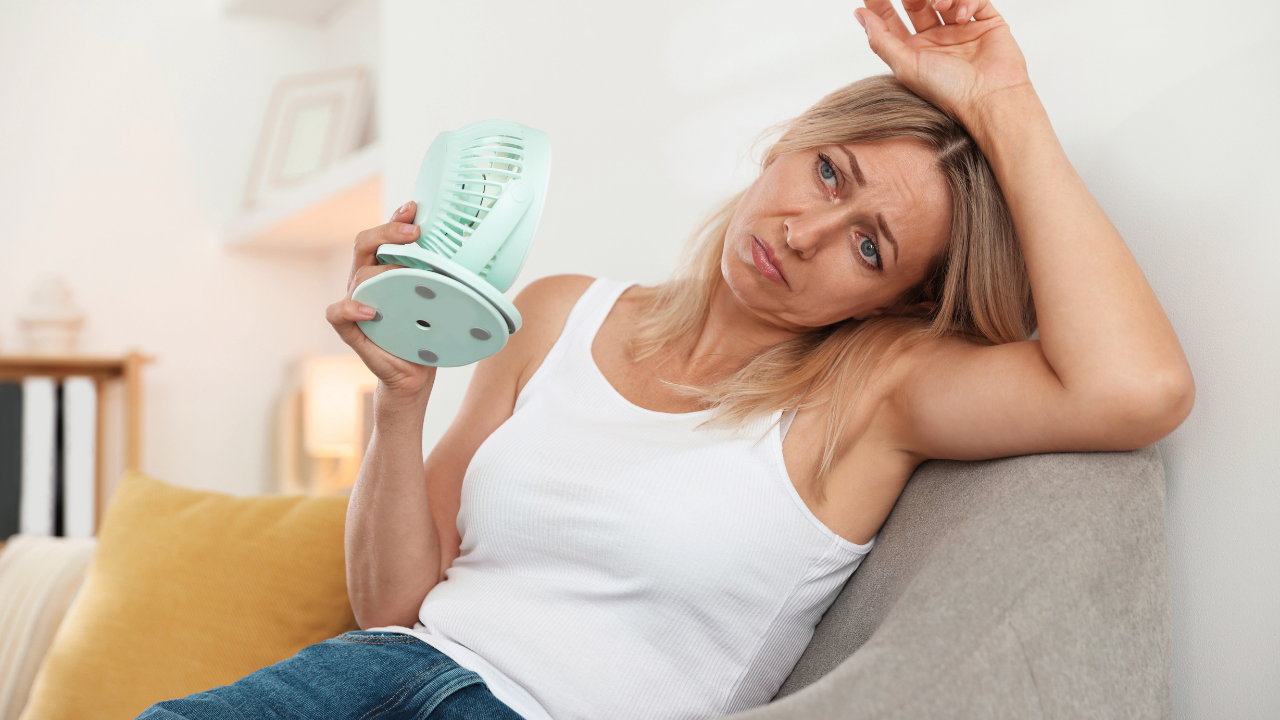
Night sweats or hot flashes
Weight changes
Lower libido
Vaginal dryness
Feeling less resilient than you used to
Not every symptom is caused by hormones.
Not every symptom means you're in perimenopause.
But if several of these changes seem to be showing up together during midlife, it's worth asking whether hormones could be playing a role.
Even Doctors Don't Always Recognize It
I'll let you in on a little secret.
Even physicians don't always recognize perimenopause when it's happening to themselves.
I certainly didn't.
I was taking continuous birth control, so I wasn't even having periods.
Then I started dealing with migraines again, stiffness, weight changes, and vaginal dryness (yes...TMI, but we're friends here).
I remember thinking,
"Wait...could this actually be happening to me?"
That experience reminded me of something important.
Many of us weren't taught much about perimenopause in medical training.
The conversation has improved dramatically over the last several years, but there's still a lot of catching up to do.
If doctors weren't taught much about it, it's no wonder women often spend years wondering what's wrong with them.
So What Should You Do?
First... don't panic.
And don't assume every new ache, pain, or bad day is caused by hormones.
At the same time, don't dismiss what you're experiencing simply because someone tells you you're "too young" or because your periods are still regular.
Instead...
Get curious.
Pay attention to patterns.
Notice when symptoms seem to cluster together.
Track changes in your sleep, mood, cycle, energy, and hot flashes if you're having them.
Most importantly, find a healthcare professional who will listen, look at the whole picture, and help you sort through the possibilities.
You're Probably Not Failing
If this article sounds familiar, I hope you'll remember one thing.
You're probably not becoming lazy.
You're probably not losing your edge.
You're probably not suddenly bad at handling stress.
And you're probably not failing.
You're navigating one of the biggest hormonal transitions of your life.
Understanding what's happening doesn't solve everything overnight.
But it often replaces shame with curiosity.
And that's a much better place to begin.
Two Free Resources to Help You Get Started
If you'd like to learn more, I've put together a couple of free resources.
A collection of trustworthy articles and resources about perimenopause, menopause, mental health, hormones, sleep, and healthy aging.
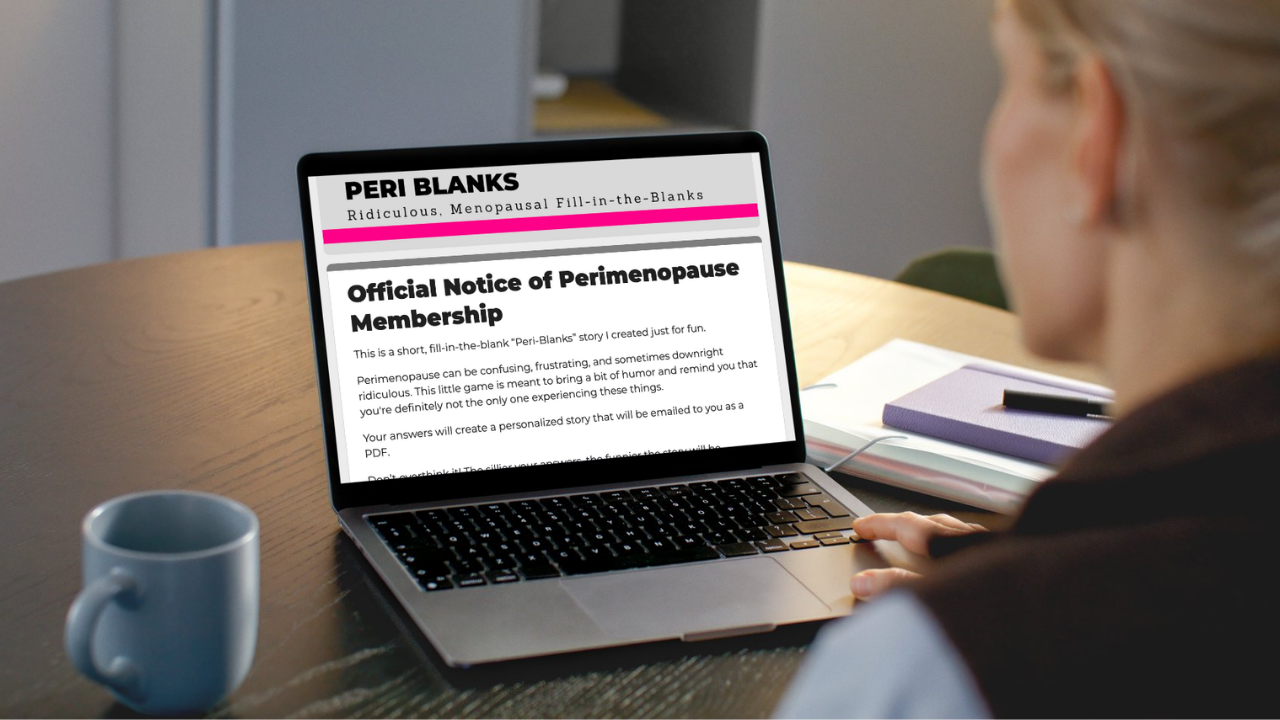
😂 The Official Perimenopause Welcome Packet
A playful "Peri-Blanks" activity (kind of like mad libs) that's equal parts ridiculous and surprisingly accurate. Sometimes laughter really is the best medicine!
I hope both remind you that you don't have to figure this stage of life out alone because changing physiology can feel like changing character.
But they're not the same thing.