What Are You Training For? Exercise in Perimenopause and Beyond
Why your midlife workout may need an update (and why doing MORE isn't necessarily the answer)
I used to think more exercise was probably better exercise.
For a few years, I did CrossFit about six days a week, often for an hour or more. Sometimes I'd add extra time on the bike or rower.
And I worked HARD.
If I wasn't completely spent and lying in a puddle on the ground afterward, did I even work out?
Then I'd look at my Apple Watch and think, THAT'S IT?! That's all I burned?!
I was fit. I was also tired, sore a lot, and somehow convinced that perhaps the solution was...more exercise.
Spoiler: it wasn't.
Over the past few years, I've changed the way I exercise quite a bit. I've also spent more time learning about exercise science and recently became an ACE Certified Group Fitness Instructor.
And as I approach exercise differently in my own life, I keep coming back to one idea:
We don't necessarily need to exercise MORE as we get older. We need to make our exercise DO more.
Exercise in midlife isn't just about burning calories
Exercise does so much more than change the number on the scale.
Regular physical activity supports cardiovascular health, muscle and bone health, physical function, sleep, mood, and overall well-being.
That's a big reason exercise sits so close to the bottom of my personal health pyramid, right above sleep.
And as we get older, I think there's an important shift worth making.
Instead of asking:
How many calories did I burn?
Try asking:
What am I training my body to be able to do?
Those are very different questions.
If you want to get stronger, your body needs a reason to adapt
Let's say you've been doing the same strength workout with the same 8-pound dumbbells for years.
Is that movement still beneficial?
Sure.
But if your goal is to stay strong or keep building strength or muscle, eventually your body needs a new challenge.
This is the basic idea behind progressive overload: gradually increasing the demand you place on your muscles as they become stronger.
That might mean increasing the weight. Or adding reps. Or increasing range of motion. Or progressing to a more difficult version of an exercise.
It does NOT mean every workout needs to leave you crawling towards the shower.
But here's an important distinction:
Exercise doesn't always have to be hard. Training sometimes does.
Walking with a friend doesn't have to be hard.
Playing tennis doesn't have to be hard.
Hiking, dancing, swimming, gardening, or moving your body because it makes you happy doesn't have to be hard.
But if you're specifically doing resistance training because you want your muscles to become stronger, the exercise actually needs to challenge those muscles.
Picking up a weight you've decided is "heavy" isn't necessarily the same thing.
Those last few reps should feel like work.
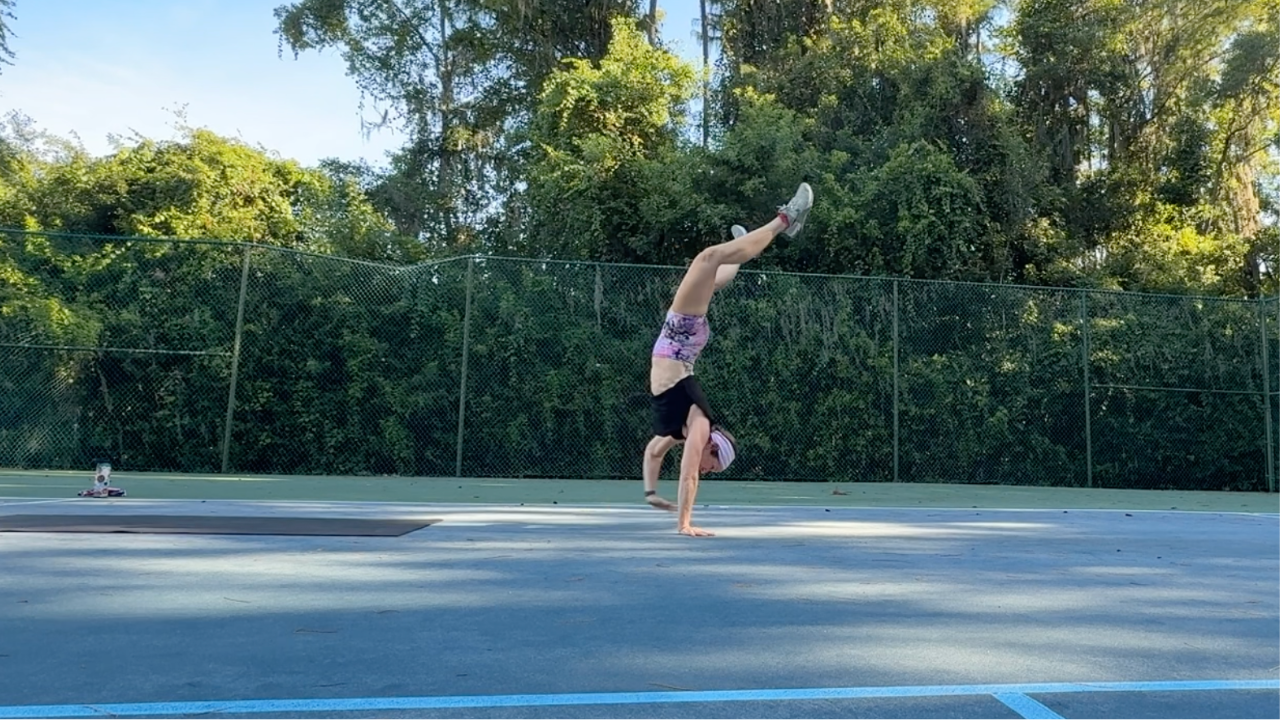
Learning to handstand walk just before my 50th birthday
Strength training matters. But cardio didn't suddenly become useless.
The internet loves extremes.
One minute women are being told they need endless cardio to stay thin. The next minute they're being told cardio is destroying their cortisol and they should only lift heavy things.
We don't need to do this.
Both aerobic exercise and strength training have important health benefits.
Current physical activity guidelines recommend that adults get a mixture of aerobic activity AND muscle-strengthening exercise.
Personally, I've changed the balance.
I spend less time doing long workouts than I used to. I prioritize heavy resistance training and include shorter, harder intervals and workouts that challenge my cardiovascular fitness.
I still walk.
I still do cardio.
I recently started learning tennis (fun but HARD!).
Sometimes movement is training.
Sometimes it's transportation.
Sometimes it's social.
Sometimes it's because hitting a tennis ball is fun even when it goes absolutely nowhere you intended.
It doesn't all have to be optimized.
Don't forget about your bones
Muscle isn't the only thing we're thinking about as we move through midlife.
Bone health matters too.
Weight-bearing and resistance exercise can support bone health, and activities that appropriately load the skeleton are an important part of maintaining physical function as we age.
Depending on your health, fitness level, joints, and fracture risk, impact activities such as jumping may also be appropriate.
This is one of those places where "what's right for me?" matters more than copying somebody else's workout from Instagram.
You can't build muscle out of good intentions
If you're asking your muscles to work hard, you also need to give your body the raw materials and recovery time to adapt.
Which brings me to protein.
I've become much more intentional about getting enough protein, including when I travel.
My family makes fun of me because I bring protein with me on trips. Yes. I have apparently become a person who travels internationally with protein powder.
But I'm not bringing it to Greece so I can spend my vacation eating grilled chicken and sadness.
I want the fish AND the baklava. The protein AND the espresso ice cream.
I'm trying to support the muscle I'm working hard to build while also enjoying my actual life.
Those things can coexist.
Lift heavy. Rest hard.
This is where I become a bit of a hypocrite.
There were years when I exercised more than 360 days a year. So please appreciate the irony when I tell you that recovery matters.
I'm apparently much better at prescribing this than practicing it.
But training provides the stimulus. Your body also needs an opportunity to recover and adapt. That doesn't necessarily mean you need to spend an entire day lying motionless on the couch.
A lighter day might include walking, mobility, balance work, or training something different.
Or, I'm told, you can actually REST. (I'm still investigating this option.)
But constantly beating up the same muscles because you're afraid a day without a hard workout "doesn't count" isn't the goal.
Challenge. Recover. Adapt. Repeat.
The most important change I've made has nothing to do with my workout
When I first started CrossFit in 2010, something shifted for me.
Exercise became less about what my body looked like and more about what my body could DO.
That's still what motivates me.
These days, I think it's pretty cool that I can climb a rope. I can help somebody move something ridiculously heavy. I can handstand-walk for over 20 feet.
Is my handstand walk beautiful?
Absolutely not.
Do my kids think it's cool?
Yes. And honestly, that's worth considerably more to me than whatever number my Apple Watch thinks I burned.
Train for the life you want to keep living
I don't want exercise to be punishment for eating. I don't want to earn dinner. I don't want to spend the next several decades trying to force my body to look exactly like it did at 30.
I want to train for Future Me.
I want to travel.
I want to hike and sail.
I want to put my own suitcase in the overhead bin.
I want to play tennis until I die.
I want to have push-up contests with my grandkids.
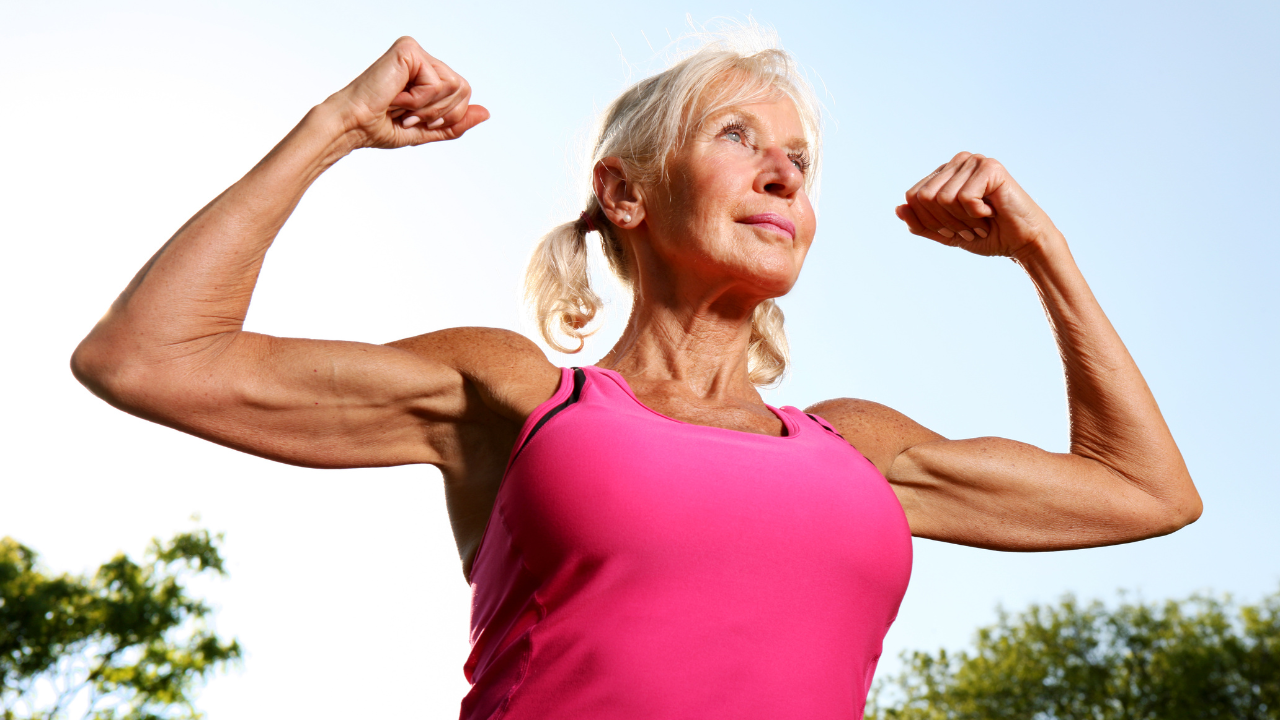
I want strong muscles and strong bones and a body that lets me keep saying YES when somebody suggests doing something ridiculous and fun.
Basically, I want to be the 80-year-old doing things that make people say:
Wait...she's EIGHTY?!
That's what I'm training for.
So if your old workout doesn't seem to be "working" anymore, the answer isn't necessarily to exercise longer, harder, or more often.
Maybe it's worth asking a different question:
What are you training for?
Then start building a body that can do it.
Exercise needs are individual, particularly if you have osteoporosis, cardiovascular disease, injuries, chronic medical conditions, or haven't exercised regularly. Talk with your healthcare clinician or a qualified exercise professional about what's appropriate for you.